Robotic resistance welding has become a key solution for manufacturers seeking higher consistency, efficiency, and long-term process stability. As production lines move toward automation, robotic resistance welding offers precise control of current, force, and time, ensuring reliable weld quality across a wide range of materials and applications.
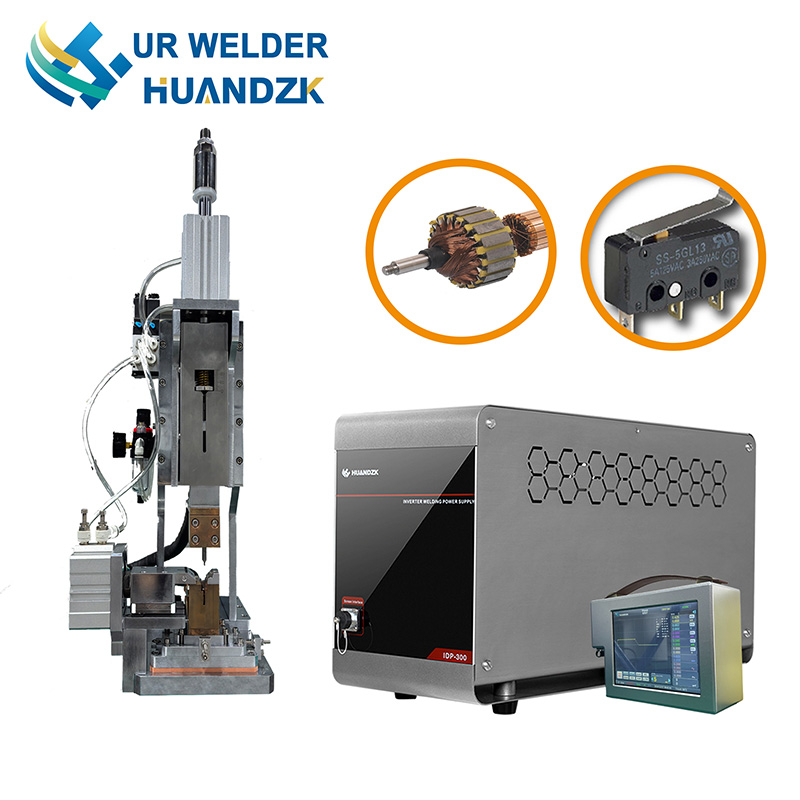
In electrical and motor manufacturing, resistance welding copper wire is one of the most demanding processes. Copper’s high conductivity requires accurate current regulation to avoid overheating or weak joints. Robotic resistance welding enables stable resistance welding copper wire by maintaining repeatable welding parameters and synchronized electrode pressure. Compared with manual operation, robotic resistance welding significantly improves resistance welding copper wire consistency and reduces defect rates in mass production.
Resistance welding titanium is another area where robotic resistance welding demonstrates clear advantages. Titanium alloys are sensitive to heat input and surface conditions, making resistance welding titanium challenging in conventional setups. With robotic resistance welding, resistance welding titanium benefits from controlled energy delivery and precise force feedback. This allows manufacturers to achieve clean welds, minimal distortion, and strong joints when performing resistance welding titanium in automotive, aerospace, and high-value industrial components.
For general production, resistance welding wire applications cover copper, steel, aluminum, and mixed materials. Whether dealing with fine resistance welding wire for electronics or heavier resistance welding wire for industrial assemblies, robotic resistance welding ensures repeatability and scalability. Automated control systems continuously optimize resistance welding wire parameters, helping manufacturers maintain stable output even with material variations.
Despite high automation, process knowledge remains critical. A well-structured resistance welding manual plays an important role in standardizing operations. From electrode selection to parameter setup, a professional resistance welding manual supports both robotic resistance welding deployment and daily production management. Engineers rely on the resistance welding manual to optimize resistance welding copper wire, resistance welding titanium, and resistance welding wire processes while reducing trial-and-error costs.
Ultimately, robotic resistance welding integrates advanced control technology with proven resistance welding principles. By combining robotic resistance welding systems with a practical resistance welding manual, manufacturers can improve resistance welding copper wire quality, achieve stable resistance welding titanium joints, and enhance overall resistance welding wire production efficiency. This makes robotic resistance welding a reliable, future-ready solution for manufacturers focused on quality, automation, and competitive advantage.